About Andreea Brabete
The experiences and ideas that shaped my approach to psychotherapy
Registered Psychotherapist, PhD, Researcher
Toronto, Ontario | English • Español • Română
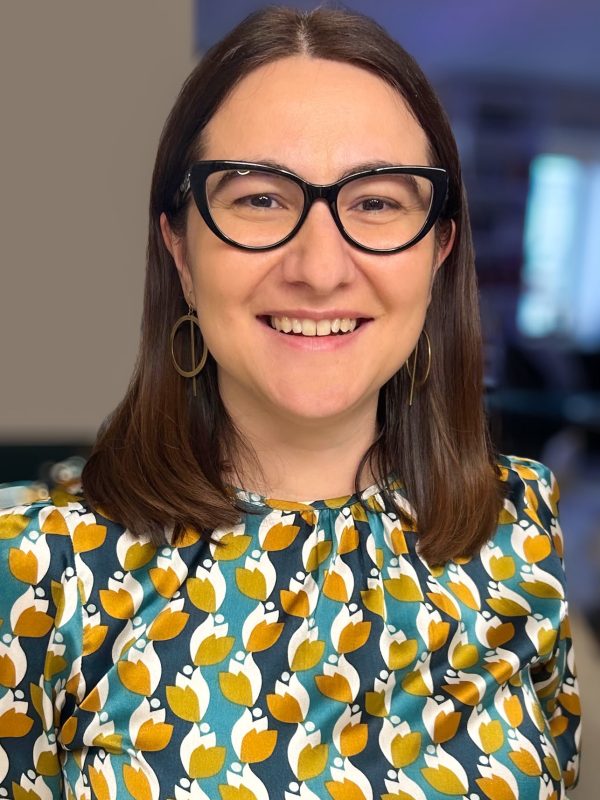
How I Got Here
From psychology and research to psychoanalytic psychotherapy.
Since adolescence, I have been interested in the inner world and what gives rise to suffering. That interest took shape through academic, clinical, and personal paths before settling into psychotherapy with a psychoanalytic orientation. During the final years of my psychology degree, I encountered psychoanalysis directly, through my own analysis, and it reshaped how I understood psychological experience.
I studied psychology at the Complutense University of Madrid and completed a PhD in Women’s Health in migration, acculturation, and how femininity and masculinity shape identity, gender, and well-being.
Years of research into women’s mental and physical health, intimate partner violence, substance use, trauma, and the roles of sex, gender, and sexual orientation left me increasingly aware of a tension I couldn’t resolve through science: the demand for objectivity sits uneasily alongside subjectivity, my own included. That tension is part of what drew me toward one-on-one clinical work, a shift shaped as much by my own psychoanalytic exploration as by my research.
My journey has also moved across countries: Romania, Spain, Italy, Germany, and Canada. Living between these contexts has shaped both my clinical and research work, particularly around questions of identity, belonging, and transition.
Who I Work With
Therapy for different experiences, backgrounds, and stages of life
I work with people from diverse backgrounds who are navigating emotional, relational, and life challenges. My experience includes working with people from diverse cultural backgrounds, international college and university students, academics and professionals, and members of the 2SLGBTQ+ and BIPOC communities.
My experience includes working with a wide variety of life experiences and challenges, including relationship difficulties, trauma, anxiety, depression, grief and loss, academic and professional stress, life transitions, parenting, aging, addictions, psychosomatic phenomena, migration, and questions of identity and belonging.
Therapy offers a space to slow down, reflect, and explore what may be difficult to put into words.
Together, we can explore the experiences and patterns that shape how you relate to yourself and others, opening possibilities for greater understanding and change.
My Approach
Understanding your experience, rather than fitting it into a formula

I believe psychotherapy offers an opportunity to understand ourselves in ways that can be difficult to achieve alone.
The struggles that bring us to therapy rarely appear out of nowhere. They often have a history, shaped by our relationships, experiences, and the ways we have learned to interact with the world. Taking time to explore those experiences can lead to a deeper understanding of ourselves and create the possibility for meaningful, lasting change.
My practice is grounded in psychoanalytic and psychodynamic psychotherapy…..
Professional profile
Education & Professional Training
Registration & Professional Memberships
Registered Psychotherapist (Qualifying)
College of Registered Psychotherapists of Ontario (CRPO)
Member
Ontario Society of Registered Psychotherapists
Education
PhD in Women’s Health
Complutense University of Madrid, Spain
Master’s Degree in Women’s Health
Complutense University of Madrid, Spain
Master’s Degree in Immigration, Refuge and Intercommunity Relationship
Autonomous University of Madrid, Spain
Master’s Degree in Clinical Psychoanalysis, ongoing
National University of San Martín, Argentina
Bachelor’s Degree in Psychology
Complutense University of Madrid, WES Recognized
Psychoanalytic Training
Psychoanalytic Training
Madrid Clinical Section (NUCEP), affiliated with the Institute of the Freudian Field in Spain
Participant
Initiative Toronto, a Lacanian psychoanalytic group connected to the New Lacanian School
Certifications
Applied Suicide Intervention Skills Training (ASIST)
Canadian Mental Health Association Toronto
You don't have to figure it out alone.
Beginning therapy can feel like a significant step, especially when you are not entirely sure where to begin.
You don’t need to have the right words or a clear explanation of what you’re experiencing. We can begin with what brings you here and explore from there.
If this resonates with you, I welcome you to get in touch.